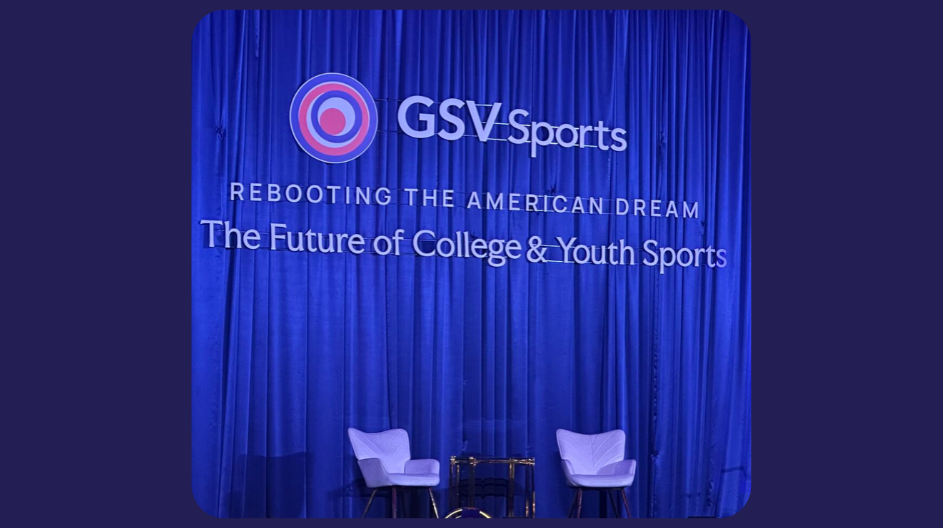
On October 28, at the GSV Sports summit at the Obama Presidential Center, I spent the day with more than 300 leaders from college athletics, Olympic governing bodies, youth sports, and philanthropy. Nearly all of them agreed that sport’s most important outcome is one the field doesn’t track: what attitudes, behaviors, and skills young people learn from playing.
GSV describes sport as “life’s original learning and leadership accelerator.” I heard versions of that idea all day, and three of them have me thinking about our work at America Succeeds.
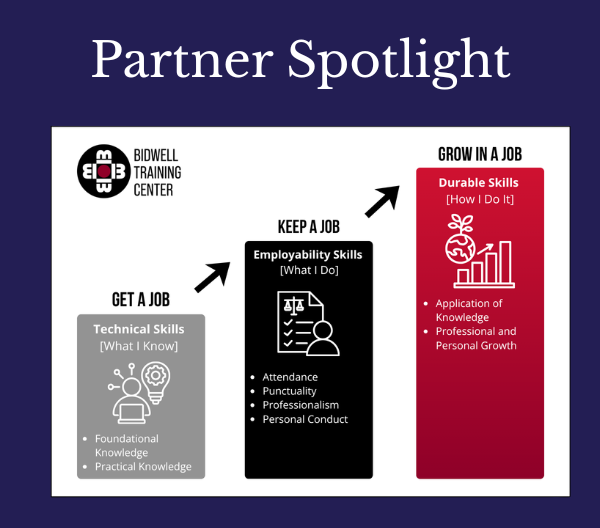
The first is that sport already speaks durable skills, in its own words. Speakers described what sport taught them in concrete terms, like recovering from a mistake before the next play or taking hard feedback from a coach who believed in them. One called it learning to “flush it,” so a bad result can’t spill into the next one. People talked about life skills and character. America Succeeds popularized the term “durable skills” with our 2021 report High Demand for Durable Skills, and I didn’t hear it once all day.
That’s useful for our field to hear. Sport built one of the largest skill-building systems in the country – reaching 250 million Americans in 2025 – with its own vocabulary. What we can offer is precision: a shared, plain description of what sport already develops, so a parent or an employer can recognize it.
The second is that sport promises development and measures participation. Someone in the youth sports session summed up the problem in five words: “We measure participation, not experience.” Youth sport counts how many kids play and how many games they win. College sport adds graduation rates and pro contracts. The growth everyone talks about mostly goes uncounted.
The best evidence the field has is correlational. EY and espnW found that 94 percent of women in C-suite roles played sports. That number shows who played, but showing what playing built requires measuring skills directly, over time.
This is the biggest opening I saw. Participation became youth sport’s shared metric partly because no organization owns a development metric. A common definition of what a good sport experience produces, written in terms coaches can use and families can see, would give the whole field a target. K-12 education spent decades counting seat time as a stand-in for learning. Sport can skip that step.
The third is that coaches are the delivery system. For many kids, a coach is the first adult outside the family who judges them on effort and on how they treat teammates. In a way, a coach is often a kid’s first boss. Coaches see durable skills under pressure, after a loss or on the day a player gets benched, and few adults in a young person’s life are better positioned to notice them.
Almost half of youth coaches are volunteers, though, based on a survey from 2022. And the incentives also run backward. Experienced coaches tend to move up to older, more competitive teams, where results get counted. The youngest players, who have the most to gain from good coaching, are often coached by a parent who stepped up. The Million Coaches Challenge has trained more than 1 million coaches since 2021, which shows training can reach scale. I left convinced the next constraint is the system around coaches: clear outcomes to coach toward, and simple ways for coaches to see whether kids are growing.
Sport continues to hold tremendous promise for all the reasons we already know, and I’m excited to see where GSV Sports goes next.
The Pathsmith® Durable Skills Framework and our PK-16 Developmental Progression describe what these skills look like as young people grow, from pre-K, through college, and into the workforce. If you’re considering how durable skills translate to the field or the court, or if you train coaches or run a youth sports program and want to explore with us, please don’t hesitate to reach out.