Every day, young people are building real skills through the experiences that fill their lives outside of the classroom, through internships and after-school jobs, on sports teams and in rehearsal rooms, through club leadership, volunteering, and more. These experiences are meaningful, often demanding, and frequently transformative. But when they end, most young people walk away knowing they worked hard without having the language to describe what they actually built or the evidence to back it up. That gap, between the durable skills young people build and the skills they can articulate, is exactly what Hidden Skills was created to close.
At America Succeeds, we’ve long argued that durable skills like communication, collaboration, critical thinking, adaptability, and leadership are among the most valuable capabilities learners can develop. Our research has shown that 76 percent of job postings request at least one durable skill, and eight of the ten most-requested skills are durable. As AI continues to reshape work, these human capabilities are becoming even more important. Yet developing durable skills is only part of the equation. Learners also need to recognize them, reflect on them, and communicate them with confidence. That’s one of the many reasons why we’re excited to welcome Hidden Skills as a Pathsmith™ partner.
How It Works
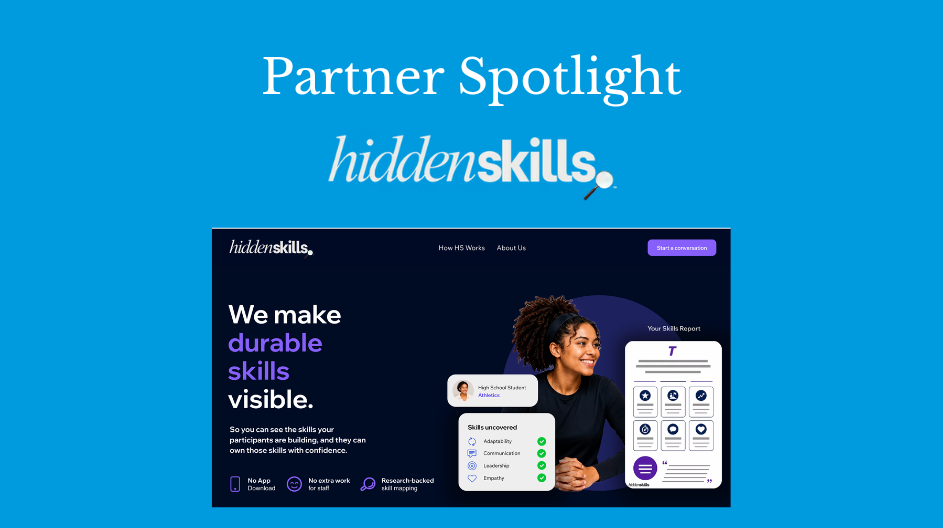
Hidden Skills is built around a simple but powerful idea: young people are already developing durable skills through meaningful experiences. Whether they’re participating in internships, work-based learning, athletics, the arts, volunteering, part-time jobs, or student leadership, they are building the capabilities employers value most. Too often, however, those experiences end without students fully understanding what they gained. Hidden Skills changes that.
Through short weekly audio reflections, students think intentionally about challenges they’ve faced, decisions they’ve made, and moments that mattered. Those reflections are then analyzed using the Pathsmith™ Durable Skills Framework to identify the durable skills students demonstrated through their own experiences and language. Every report is reviewed by an experienced educator before it reaches a learner, ensuring that every skill identified is grounded in authentic evidence, not generated assumptions. The result is something far more valuable than another checklist or badge. Students gain a vocabulary for describing what they can do.
The benefits don’t stop with the student. Because every reflection is analyzed through the same Pathsmith™ framework, the schools, programs, and employers sponsoring these opportunities gain student-level and cohort-level insight into the durable skills their students are building, a clear view of outcomes that have been hard to see until now. Naming those skills also shows that the experiences these organizations designed did what they were built to do, amplifying not only a student’s effort but the work of everyone who created the opportunity.
That matters because durable skills are often invisible until someone helps make them visible. A student who resolves conflict during an internship may not recognize they demonstrated collaboration and communication. A team captain may not realize they’re building leadership, accountability, and adaptability. A volunteer coordinating an event may not see the problem solving and project management happening in real time.
When learners can connect those experiences to the skills they’ve developed, they become better prepared to tell their own stories in college applications, job interviews, and future workplaces.
As Hidden Skills founder Jennifer Henry explains: “Young people are already building the durable skills that shape a career. They build them in internships, on job sites, on teams, in rehearsal rooms, and in clubs they lead. What goes missing is the naming.
When a young person hears their own words reflected back with a skill attached, they can walk into an interview and say what they can do, and back it up. That is the whole idea. Nothing invented, nothing inflated. Every skill traces back to something they actually said and did.
Young people earn these skills, and what they earn is theirs to hold with confidence.”
Shared Language Makes It Possible
Pathsmith™ wasn’t designed simply to define durable skills. It was designed to create a common language that educators, employers, and learners can all use to understand, develop, assess, and communicate these essential capabilities. Shared language makes durable skills teachable. It makes them measurable. And increasingly, it makes them portable across classrooms, workplaces, and careers.
Hidden Skills demonstrates what becomes possible when that shared language is put into practice. By helping students reflect on authentic experiences through the lens of the Pathsmith™ Durable Skills Framework, Hidden Skills gives young people something many have never had before: the ability to confidently explain not just what they’ve done, but who they’ve become because of those experiences. That’s an increasingly valuable advantage in a labor market where employers are looking beyond technical knowledge alone.
To learn more visit or reach out directly to