
At America Succeeds, we see every day just how strong employer demand for durable skills really is. But the public’s perspective on these skills has been much harder to pin down. Recently, I learned that voters and employers are on the same page: traditional academic knowledge matters, but students need a broader set of competencies to succeed. Workforce preparedness hinges on how well students develop durable skills. Last month, I attended the PIE Network Summit in Atlanta and watched a presentation that stuck with me. It featured public opinion polling data of 1,015 registered voters, conducted jointly by UpOne Insights and Impact Research, and the findings made one thing clear: voters want our education system to evolve to better serve learners in an increasingly complex world.
It’s worth noting that foundational academics remain a top concern. According to this poll, 80 percent of all respondents said that “ensuring every child is at grade level in reading, math, and writing” should be a very important priority in their state. It was, predictably and rightfully, the highest-rated item on the list of public education goals. Right alongside it, though, is a powerful call for workforce preparation. According to the same polling, 70 percent of total respondents and 76 percent of parents said that “preparing students for the workforce” should be a very important priority. That tied it for second among the highest education priorities for all respondents.
Yet there’s a significant gap between what the public wants and what they believe schools are delivering. Only 37 percent of respondents said that high school graduates in their state are “properly prepared for a job” and only 46 percent said that high school graduates are either very prepared or somewhat prepared for life after high school in general. This is a clear signal that we must reconsider how we define readiness and reimagine how we support students in developing the skills to succeed beyond high school.
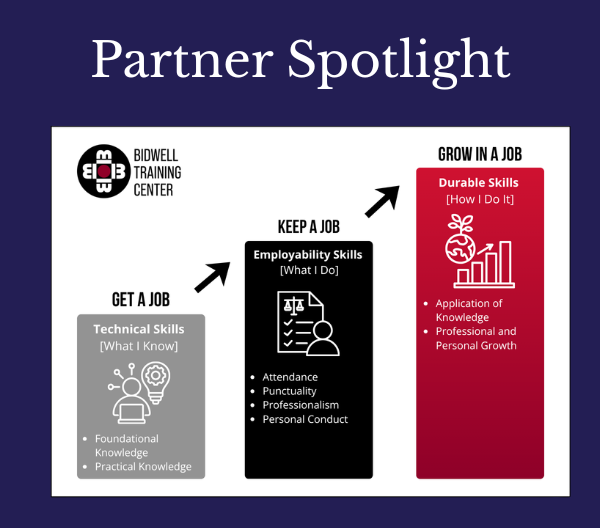
At America Succeeds, we believe that a key piece of the solution lies in emphasizing durable skills like communication, critical thinking, leadership, collaboration, and adaptability. These are the competencies employers are demanding at astonishingly high rates and yet often find missing in young candidates.
This gap is backed by workforce-focused polling data. A report from General Assembly found that only 18 percent of U.S. company leaders they surveyed believe entry-level workers are very or completely prepared to do their jobs. The primary reason? Gaps in soft skills, not technical knowledge. 58 percent of U.S. company leaders “blame weak soft skills for entry level unpreparedness.”
It’s not just business leaders raising the alarm. The public is saying the same. Populace’s Purpose of Education Index shows that most Americans believe education should prepare students to become capable and independent adults who are prepared to thrive in any post-high school pathway they choose. Among the priorities that Populace surveyed respondents about, “students are able to think critically to problem solve and make decisions” was the second highest priority, while “students demonstrate character (e.g. honesty, kindness, integrity, and ethics)” was the third highest priority (pg. 9). Unfortunately, just 33 percent “believe their local schools satisfactorily deliver” on each of those priorities (pg. 24).
At America Succeeds, we’re working to close the gap. Our Pathsmith™ Durable Skills Framework, co-developed with leading employers and educators, delivers a shared lexicon to help educators, policymakers, and industry align on competency definitions for durable skills that students unquestionably need for long-term success.
We’re already seeing its deep impact. Edmentum is integrating the framework into its robust catalog of CTE courses for middle and high school students. TNTP is using it to design and deliver technical implementation services for districts working to embed durable skills throughout the school day. Nimo is offering AI-powered simulations to help learners practice and strengthen essential workplace competencies through realistic, scenario-based experiences. And many other partners are putting it to work in efforts aimed at strengthening students’ postsecondary and workforce readiness through durable skills development. The Pathsmith™ Durable Skills Framework is proving to be a key ingredient in redesigning learning experiences that help students build the human skills they’ll need to reach their lifelong goals.
The public has spoken. It’s time we meet the moment—and deliver an education system that equips every learner for the future of work, not just the next test.