For several weeks, we’ve shared stories of remarkable transformation. Sophia designing pediatric medical equipment that hospital staff said exceeded the quality of some new hires. Olivia overcoming paralyzing perfectionism to conduct graduate-level veterinary research. Kaveon arriving at school as a shooting victim afraid to make eye contact, graduating as a confident professional artist. Grace transforming from someone terrified of talking to strangers into a teacher whose mentor requested to keep using her curriculum materials.
These stories illustrate something important: every student has potential that typical school structures, with their focus on content coverage and standardized testing, often fail to develop. These weren’t students who needed different opportunities; they needed different approaches. The schools in our study provided those approaches, and the results speak for themselves.
Over several weeks, we’ve explored how schools develop each of the ten durable skills: Communication, Collaboration, Critical Thinking, Creativity, Leadership, Metacognition, Character, Growth Mindset, Mindfulness, and Fortitude. We’ve shown you the three-part framework—making skills explicit, creating authentic experiences, and integrating skill development into everything—that makes transformation systematic rather than accidental.
Now, as we conclude this series, we step back to ask: why do these skills matter so much? What advantage do they provide—not just for employment, but for navigating life itself?
The answer starts with what employers, researchers, and workforce experts are telling us and extends far beyond the workplace.
What Employers and Researchers Are Telling Us
The message is coming from everywhere: technical skills alone aren’t enough.
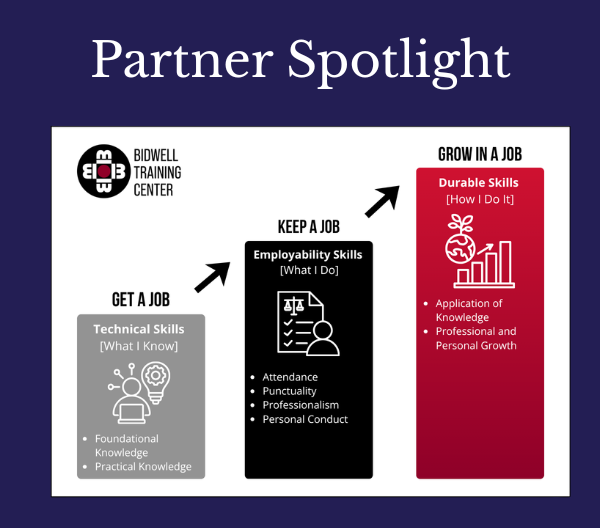
America Succeeds’ analysis of over 80 million job postings reveals that durable skills appear in job requirements nearly four times more frequently than top technical skills. Communication, collaboration, and critical thinking aren’t supplementary preferences listed as “nice to have.” They’re core requirements across industries, occupations, and regions.
But this isn’t just an American phenomenon, and it isn’t just employers saying it. Research organizations, workforce development experts, and policy analysts worldwide are reaching the same conclusions:
The World Economic Forum’s Future of Jobs Report 2025 identifies analytical thinking, resilience, flexibility, and leadership as the top skills employers need, and WEF projects that 39% of workers’ core skills will need to change by 2030.1 The report emphasizes that as AI and automation transform the workplace, durable skills are growing in importance more rapidly than many technical skills.
McKinsey Global Institute’s research on the future of work projects that demand for social and emotional skills will rise by 14% in the U.S. and 11% in Europe by 2030, even as AI and automation transform the workplace.2 Their analysis shows that more than 70% of the skills employers seek today are used in both automatable and non-automatable work—meaning durable skills remain relevant regardless of how technology evolves.
The Organisation for Economic Co-operation and Development (OECD) emphasizes that while AI adoption is driving demand for technical AI skills, “the vast majority of workers exposed to AI will not require specialized AI skills.”3 Instead, they’ll need the ability to communicate, collaborate, and adapt alongside these technologies.
ManpowerGroup’s Talent Shortage Survey reports that 75% of employers globally are struggling to fill open positions.4 The shortage isn’t primarily technical. Employers consistently cite problem-solving, critical thinking, and collaboration as among their hardest-to-find capabilities.
Springboard for Business’s State of the Workforce Skills Gap 2024 found that 70% of executives say skills gaps are hurting their bottom line, with direct impacts including revenue loss, limited innovation and growth, and decreased productivity.5
The research is unambiguous: as AI and automation handle increasing percentages of routine cognitive and manual tasks, distinctly human capabilities become more essential, not less. Students graduating without these capabilities aren’t just underprepared; they’re increasingly at a disadvantage in a labor market that values what humans do best.
The Workforce Readiness Advantage
The students in our study aren’t just learning skills in the abstract. They’re developing workforce-ready capabilities through authentic professional experience.
Sophia at STEM School Chattanooga designed medical equipment that hospital professionals evaluated against the same standards they’d apply to new hires, and her work exceeded expectations. Connor at Building 21 logged over 100 hours teaching elementary students, developing classroom management, instructional delivery, and professional communication skills that most education majors don’t acquire until student teaching. Brooke at GO CAPS Monett earned her EMT certification while still in high school, entering the workforce with credentials and experience her peers won’t have for years.
These students didn’t just learn about professional work; they did professional work. They received feedback from working professionals, not just teachers. They met real deadlines with real consequences. They learned to communicate with supervisors, collaborate with colleagues, and adapt when initial approaches didn’t work.
This is what workforce readiness actually looks like: not content knowledge alone, but the capabilities to apply knowledge effectively in professional contexts. Students who develop these skills in high school enter college or careers already functioning at levels their peers won’t reach for some time.
Skills That Serve You Everywhere
Here’s what makes durable skills truly durable: they don’t just help you get and keep a job. They help you navigate life.
The communication skills Sophia developed presenting to medical professionals? They serve her equally when advocating for herself at college, navigating difficult conversations with family, or explaining complex situations to friends. The persistence Brooke built earning her EMT certification? It transfers to finishing a challenging degree, working through relationship difficulties, or pursuing any goal that requires sustained effort through obstacles.
Consider what students actually face as they launch into adulthood: choosing colleges and majors, managing finances for the first time, building new relationships, handling disappointment and rejection, making decisions with incomplete information, balancing competing demands on their time and energy. Every one of these challenges draws on durable skills—critical thinking to evaluate options, communication to express needs and understand others, fortitude to persist when things get hard, metacognition to learn from experience and adjust course.
Olivia’s transformation is instructive here. Her perfectionism didn’t just threaten her academic success; it was making her life smaller, keeping her from trying anything where failure was possible. The agency she developed through authentic challenge and supportive relationships doesn’t just make her a better employee. It makes her someone who can take on new experiences, recover from setbacks, and pursue what matters to her rather than playing it safe.
This is why we call them “durable” skills—they last, they transfer, and they compound across every domain of life. Students who develop them aren’t just more employable. They’re better equipped to handle whatever comes next.
Beyond Skills: Agency, Identity, and Vision
Our research revealed something even more powerful than skill development: when schools implement the three-part framework effectively, students develop capabilities that go beyond any skill list—capabilities that shape how they approach both work and life.
Agency. Students who experience authentic challenge with appropriate support develop confidence in their ability to direct their own path and navigate unfamiliar situations. Olivia, who once froze at every decision, now approaches new challenges (academic, professional, personal) with confidence born from experience. “I know I can figure it out,” she says, “because I’ve figured out hard things before.” This self-direction is precisely what employers describe when they want “self-starters,” but it serves students equally in every other domain: choosing what to study, deciding where to live, determining what kind of life they want to build.
Professional Identity. Students don’t just learn about professions. They begin seeing themselves as capable people who can contribute meaningfully to the world. Connor doesn’t say he wants to be a teacher someday; he identifies as a teacher now, grounded in over 100 hours of authentic teaching experience. This identity shift matters for careers, but it matters just as much for how students see themselves as people who can make things happen, solve problems, and add value wherever they go.
Informed Future Vision. Students develop clarity about their futures grounded in authentic experience rather than speculation. Zoe at Gibson Ek didn’t just read about marine biology; she spent three years working at a salmon hatchery, understanding the daily realities of conservation work. This kind of informed vision helps students make better decisions not just about careers, but about what kind of life will be meaningful to them: what tradeoffs they’re willing to make, what environments help them thrive, what contributions matter most to them.
Agency, professional identity, and informed future vision compound the value of durable skills. Students don’t just have capabilities; they have the confidence to deploy them, the identity to continue developing them, and the clarity to apply them strategically toward goals that matter.
The Compounding Returns of Early Development
Here’s what makes developing durable skills in high school so valuable: these capabilities compound over time, in every area of life.
The research supports this. Nobel laureate economist James Heckman’s foundational work on human capital demonstrates that character skills—including perseverance, self-control, and social skills—are as predictive of life outcomes as cognitive abilities.6 His research shows that both types of skills can be developed and that early investment yields significant returns.
The Collaborative for Academic, Social, and Emotional Learning (CASEL) reports that students who participate in social-emotional learning programs see academic gains that persist years later: their academic performance remains 13 percentile points higher than non-participants long after programs end.7 Perhaps more importantly, “stronger social and emotional skills contribute to positive lifetime outcomes up to 18 years later.” CASEL’s analysis estimates an $11 return for every dollar invested in SEL programming.
A student who develops strong communication skills at 16 has years to refine them before entering the full-time workforce, and that student also has those years to apply them in friendships, family relationships, college classes, and community involvement. Each conversation, each presentation, each difficult discussion builds on a foundation already established.
The same compounding applies to every durable skill. Students who learn to collaborate effectively at 17 enter college group projects, roommate negotiations, and early career teams with capabilities their peers are still developing. Students who learn to persist through difficulty in high school don’t crumble at the first professional setback—or the first personal one.
Durable skills are called “durable” for a reason: they last, they transfer, and they grow. Students who develop them early don’t just have a head start in careers; they have a foundation for navigating adult life with confidence and capability.
Schools Are Responding, and Results Are Spreading
The good news: more schools are recognizing these gaps and doing something about them.
The schools we studied share practices openly, welcome visitors, and collaboratively solve implementation challenges. Gibson Ek hosts educators wanting to understand their advisory and internship systems. STEM School Chattanooga shares their three-tenet framework freely. Building 21 documents their competency-based model for anyone interested. Networks like Big Picture Learning, Deeper Learning, New Tech Network, and NAF provide technical assistance, professional development, and peer learning communities.
And the evidence keeps building. Rural Indiana, urban Philadelphia, suburban Seattle—if systematic durable skills development works across this diversity of contexts, it can work in your community too. Each new school implementing these principles generates additional proof that this isn’t exceptional luck or charismatic leadership. It’s intentional design generating predictable results.
The question isn’t whether we can prepare students with skills that serve them in work and life. The schools in our study proved we can. The question is whether we’ll do so at the scale our students deserve.
Giving Students the Advantage They Deserve
Every student deserves to enter adulthood with capabilities that will serve them—in their careers, yes, but also in their relationships, their personal growth, their navigation of an uncertain world. Every student deserves the agency to direct their own path, the identity to see themselves as capable contributors, and the informed vision to make choices aligned with what matters to them.
Sophia, Olivia, Kaveon, Grace, Marcus, Brooke, Connor: they showed what’s possible when schools create the right conditions. They’re entering adulthood with advantages their peers don’t have. Not just skills, but these students have the experience of using those skills in authentic contexts, the confidence that comes from demonstrated competence, and the clarity that comes from genuine exploration of who they are and what they want.
Your students possess the same potential. The difference lies not in student capability but in whether schools design for intentional skill development or hope it happens accidentally.
The resources are coming. Next week, we’ll announce the complete resource library emerging from this research: comprehensive reports, practical guides, and detailed school profiles designed to help you begin this work wherever you’re starting. Whether you’re a classroom teacher wanting to try one new approach or a district leader planning systemic transformation, resources that can be tailored to your context will be available.
The workforce of today and tomorrow demands durable skills. So does life. The students who develop them will be better prepared for both: more employable, more adaptable, and more equipped to build lives that are meaningful to them.
Next week: Your complete guide to the durable skills resource library: everything you need to begin giving your students the advantage they deserve.
Looking for K-12 durable skills resources? Explore our previous posts in this series to see the framework in action, and join the K-12 Durable Skills Project Pilot.
References
1. World Economic Forum. (2025). Future of Jobs Report 2025. Retrieved from https://www.weforum.org/publications/the-future-of-jobs-report-2025/
2. McKinsey Global Institute. (2024). A New Future of Work: The Race to Deploy AI and Raise Skills in Europe and Beyond. Retrieved from https://www.mckinsey.com/mgi/our-research/a-new-future-of-work-the-race-to-deploy-ai-and-raise-skills-in-europe-and-beyond
3. OECD. (2025). Bridging the AI Skills Gap: Is Training Keeping Up? OECD Artificial Intelligence Papers. Retrieved from https://oecd.ai/en/work-innovation-productivity-skills
4. ManpowerGroup. (2024). 2024 Global Talent Shortage. Retrieved from https://go.manpowergroup.com/talent-shortage
5. Springboard for Business. (2024). The State of the Workforce Skills Gap 2024. Retrieved from https://www.springboard.com/business/workforce-skills-gap/
6. Heckman, J. J. (2008). Schools, Skills, and Synapses. Economic Inquiry, 46(3), 289-324. See also: Heckman, J. J., Stixrud, J., & Urzua, S. (2006). The Effects of Cognitive and Noncognitive Abilities on Labor Market Outcomes and Social Behavior. Journal of Labor Economics, 24(3), 411-482.
7. Collaborative for Academic, Social, and Emotional Learning (CASEL). What Does the Research Say? Retrieved from https://casel.org/fundamentals-of-sel/what-does-the-research-say/