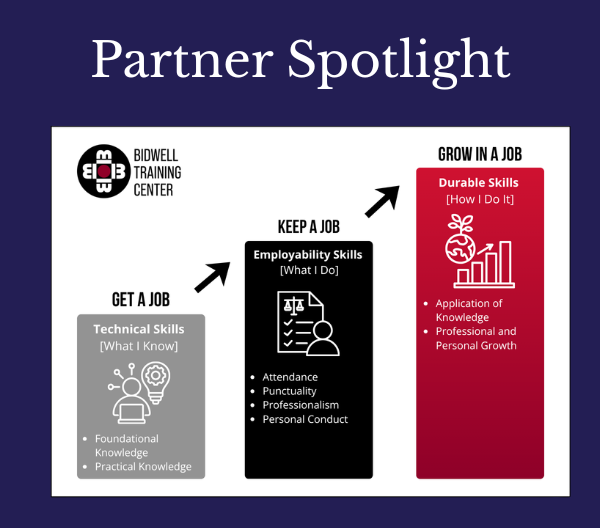

In early March, America Succeeds published Beyond the Portrait, a 50-state policy scan examining the enabling conditions that allow Portrait of a Graduate visions to translate into practice. The scan assessed 22 enabling policy and state leadership conditions across six categories: Portrait Vision, College and Career Readiness, Applied Learning Opportunities, Competency-Based and Student-Centered Education, Graduation Requirements, and Accountability Systems. The core finding is that what matters most is not only how many enabling conditions a state has in place, but whether those conditions compound on one another to form a coherent infrastructure for academic, durable, and technical skills development.
But 22 conditions is not an exhaustive list. Throughout the research process, we considered a broader set of conditions before narrowing the framework to its final form. Some were excluded because they were difficult to scan for consistently across 50 states. Others overlapped with conditions already in the framework. And in one case, a condition had already been mapped more comprehensively by another research organization.
This post highlights four conditions that came close to making the cut. We chose not to include them, but for state leaders building the infrastructure to bring a portrait to life, each represents a meaningful lever.
Educator Professional Development for Durable Skills Instruction
Does the state provide or fund professional learning opportunities for educators focused on implementing competency-based, student-centered, or durable skills-aligned instruction and assessment?
Considered for: Competency-Based and Student-Centered
Implementing competency-based, student-centered, or durable skills-aligned instruction requires educators to teach and assess differently. Professional development is a critical piece of building that capacity. We did not include this condition because state-level investment in this type of PD is rarely codified in policy in a consistent, scannable way. Most states subsidize educator professional learning through federal funding streams, particularly Title II-A, rather than through dedicated state policy or appropriations.
The scan framework focuses on conditions that shape what is possible at the state system level: whether applied learning is funded, whether mastery-based credit is allowed, whether graduation requirements include durable skills. Professional development shapes something different. It shapes whether educators have the capacity to act on those system-level conditions in their classrooms. States that invest in targeted PD for durable skills instruction and competency-based assessment are building the human infrastructure that makes every other enabling condition more effective.
Transferability of Dual Enrollment Credits
Does the state ensure transferability of dual enrollment credits across public IHEs?
Considered for: Applied Learning Opportunities
As more states expand access to dual enrollment, a practical question becomes increasingly important: do the credits students earn in high school transfer cleanly to states’ public institutions of higher education? Some states have codified transferability in statute. Others have established statewide articulation agreements for a core set of courses. Still others leave it to individual institutional agreements, creating an uneven landscape for students.
We chose not to include this condition for two reasons. The variation in how states accomplish transferability made it difficult to construct a question that would compare meaningfully across all 50 states. And credit transferability is slightly downstream from the student experience the scan was designed to capture. The scan focused on whether students have access to dual enrollment and whether that access is funded. Whether those credits transfer is a postsecondary system question that affects the value of the experience after high school rather than its availability during high school.
That does not diminish its importance. A student who earns 15 dual enrollment credits only to find that their chosen college will not accept them has been failed by a system that promised something it could not deliver.
Cross-Sector Partnerships and Intermediaries for Work-Based Learning
Does the state fund cross-sector partnerships or intermediaries to support schools in offering WBL/youth apprenticeships?
Considered for: Applied Learning Opportunities
Scaling work-based learning and youth apprenticeships requires coordination infrastructure: organizations or systems that broker relationships between schools and employers, manage placement logistics, ensure quality, and troubleshoot problems. These intermediaries take many forms, from state-funded nonprofits to regional workforce development boards to organizations embedded within CTE systems.
We chose not to include a standalone question about intermediary funding for two reasons. The scan already includes a question about dedicated ALO funding streams, and we found that some of those streams include allowable expenses for contracting intermediaries. And the variation in intermediary models across states would have made a standalone question difficult to answer consistently.
Still, the coordination function intermediaries serve is essential. A state can fund work-based learning and incentivize employers to participate, but if no one is managing the connections between schools and workplaces, the system depends on individual relationships rather than institutional infrastructure.
State Flexibilities for Competency-Based Education
What specific flexibilities (e.g., pilot programs, waivers, exemptions) does the state provide to schools and districts seeking to test or scale competency-based education?
Considered for: Competency-Based and Student-Centered
Many states have created specific mechanisms to help schools and districts test or scale competency-based education, including pilot programs, seat-time waivers, assessment exemptions, and dedicated CBE funding. We chose not to include this condition because it has already been answered more comprehensively than a single scan question could capture. The State of CBE policy scan conducted by KnowledgeWorks and FullScale maps the CBE policy landscape in detail, with individual questions addressing pilots, waivers, funding, and implementation networks. Rather than producing a less rigorous version of that work, we focused on the CBE conditions that were not already well-mapped or that had already been but were central to the content in the scan: whether states allow credit by mastery demonstration, whether they have published guidance on how mastery is determined, and whether their instructional time definitions are flexible enough to support competency-based approaches.
State leaders interested in the full picture of CBE flexibility should consult the KnowledgeWorks and FullScale State of CBE research alongside this scan.
Why These Conditions Still Matter
The decision not to include a condition in the scan is not a judgment about its importance. Professional development builds the capacity to deliver. Credit transferability protects the value of what students earn. Intermediaries provide the connective tissue that makes work-based learning scalable. CBE flexibilities create the space for schools to innovate. Each plays a role in the broader infrastructure that turns portrait visions into practice.
The scan framework is a living tool, and these four conditions represent a frontier of future research. State leaders building coherent infrastructure for durable skills development should not limit their thinking to the 22 conditions in the scan. The scan is a diagnostic starting point. The work of aligning vision, policy, funding, and practice is broader than any single framework can capture, and these conditions are a good place to continue the conversation.
Read the full Beyond the Portrait report and dig into the data.
This is the second in a series of posts exploring findings from the Portrait to Practice report. Read the first post here.